


Hot Products
YSX500D 50kW DR system set up and put into service in Cambodia.
YSENMED YSX500D 50kW digital x-ray system has been successfully set up and put into service in a hospital in Cambodia.
YSX056-PE serving as a vehicle-mounted x-ray in the Philippines
YSX056-PE 5.6kW portable x-ray unit has been adapted to fit on a truck, to provide mobile x-ray examination service for remote communities in the Philippines.
X Ray Machine To Zimbabwe
x ray machine, 50KW x ray machine
Microscope To Malawi
Achromatic objectives: 4X、10X、40X(S), 100X(S、Oil) Wide field eyepiece: WF10X(WF16X for option) Eyepiece head: Sliding binocular head inclined at 45° Stage: Double layer mechanical stage size 140X140mm, moving range 75X45mm Focusing: Coaxial coarse and
How to Use the Infant Radiant Warmer?
Views : 5848
Update time : 2025-09-21 16:28:00
Introduction
If you've ever stepped into a neonatal intensive care unit (NICU) or even a delivery room, chances are you've seen a radiant warmer glowing softly above a newborn. These devices are lifesavers—literally. But if you're new to the world of infant care, you might be wondering: How exactly do you use an infant radiant warmer?
Well, you've come to the right place. In this guide, we'll break it all down in a way that's easy to follow. Whether you're a new nurse, a medical student, or just a curious parent, I'll walk you through what these warmers are, why they're important, and the step-by-step process of using one safely and effectively.
What Is an Infant Radiant Warmer?
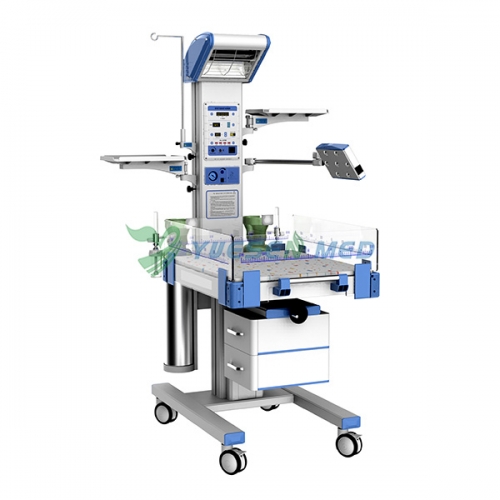
Let's start with the basics. An infant radiant warmer is a medical device designed to keep newborns warm when they can't regulate their body temperature on their own. Unlike an incubator, which encloses the baby, a radiant warmer uses an overhead heating element that emits infrared radiation. This heat gently warms the baby's skin and body.
Think of it like standing under a heat lamp on a cold winter's day—it warms you up without the need to wrap yourself in a blanket.
Why Do Newborns Need Radiant Warmers?
Newborns, especially premature babies, lose heat quickly. Their bodies are small, their skin is thin, and they don't have enough fat reserves to stay warm. If their body temperature drops, it can affect everything—from breathing to blood sugar levels.
A radiant warmer:
Prevents hypothermia.
Keeps the baby stable during resuscitation or procedures.
Allows caregivers easy access without worrying about the baby getting cold.
Key Features of an Infant Radiant Warmer
Before we dive into how to use one, let's look at what makes up this device:
1. Overhead Heating Element– The heart of the warmer.
2. Skin Temperature Sensor– A small probe attached to the baby's skin to monitor temperature.
3. Control Panel– Lets you set modes, adjust temperature, and track alarms.
4. Bassinet or Bed– Where the baby lies, usually padded and adjustable.
5. Safety Alarms– Alerts for overheating, low skin temp, or sensor issues.
Types of Operating Modes
Infant radiant warmers usually have two main modes:
Manual Mode: You set the heat output manually. This is useful in emergencies when quick warming is needed.
Servo Mode: The warmer automatically adjusts heat based on the baby's skin temperature sensor. This is the safer and preferred mode for most cases.
Preparing the Radiant Warmer for Use
Alright, so you've got a warmer ready. What now? Preparation is key.
1. Check the Power Supply– Make sure it's plugged in and switched on.
2. Inspect the Heater Head– Ensure it's working and positioned correctly above the bed.
3. Test the Alarms– Run a quick check to confirm that alarms sound properly.
4. Pre-warm the Bed– Allow the device to stabilize before placing the baby.
5. Gather Supplies– Have everything you'll need (blankets, suction, oxygen, etc.) nearby.
Positioning the Baby
When placing the baby under the warmer, remember: comfort and safety come first.
Lay the baby flat on their back in the center of the bed.
Keep the head slightly elevated if necessary.
Avoid covering the sensor site with blankets (it can interfere with readings).
Secure the skin probe properly on the baby's abdomen or back.
Attaching the Temperature Sensor
The temperature sensor is the little hero of this system. Here's how to apply it correctly:
1. Choose a flat, hairless spot on the baby's skin (usually the right upper abdomen).
2. Clean and dry the skin.
3. Stick the probe securely but gently.
4. Connect it to the warmer's control unit.
Tip: Never place the sensor over bony areas or directly under the heater—it gives inaccurate readings.
Choosing the Right Mode
This is where decisions matter.
If immediate resuscitation is needed?→ Go with Manual Mode.
If the baby is stable but requires ongoing warming?→ Switch to Servo Modeand set the target temperature (usually 36.5–37.0°C).
Monitoring During Use
You can't just set it and forget it. Babies are unpredictable, and their needs change quickly.
Keep an eye on:
Baby's skin temperature(via probe).
Baby's overall condition—breathing, color, heart rate.
Warmer display panel—watch for alarms or abnormal readings.
Safety Precautions
Like any medical device, radiant warmers come with safety rules.
Never leave the baby unattended.
Avoid overheating—the baby can't move away if it's too hot.
Always double-check the sensor placement.
Keep electrical cords and equipment organized to prevent accidents.
Common Mistakes to Avoid
Even trained professionals slip up sometimes. Here are mistakes to watch for:
1. Using manual mode for too long– Risk of overheating.
2. Misplaced skin probe– Causes false readings and unsafe adjustments.
3. Covering the baby with thick blankets– Blocks the radiant heat.
4. Ignoring alarms– They're there for a reason!
Cleaning and Maintenance
No one likes hospital-acquired infections, right? Proper cleaning is non-negotiable.
Wipe down surfaces after every use.
Disinfect the mattress and probes.
Follow the manufacturer's schedule for servicing.
Replace disposable parts (like probe covers) regularly.
Tips for Parents Seeing a Warmer for the First Time
It can be scary seeing your baby under a big machine with wires and alarms. Here's some reassurance:
The warmer is not harmful—it's like a sunlamp, not an X-ray machine.
The baby isn't in pain.
Nurses and doctors are always nearby, keeping watch.
Advanced Features in Modern Warmers
Today's devices come packed with smart technology:
Built-in resuscitation modules.
Oxygen monitoring.
Integrated weighing scales.
Data recordingfor continuous monitoring.
These features make care safer and more efficient.
Final Thoughts
Using an infant radiant warmer might seem complicated at first, but once you break it down, it's really about ensuring one simple thing—keeping a newborn warm and safe. From setting it up, attaching the sensor, choosing the right mode, to monitoring closely, each step is about giving the baby the best possible start in life.
So, the next time you see that soft glow above a newborn, you'll know exactly what's going on and why it's so important. After all, a warm baby is a healthy baby—and that's a win for everyone.
Related News
Read More >>
 Dr. Kabani from Mali Praises YSENMED YSB-S7 4D Color Doppler Ultrasound Scanner
Oct .26.2026
Dr. Kabani from Mali chose the YSENMED YSB-S7 4D Color Doppler Ultrasound Scanner with a trolley and praised its clear imaging performance and excellent after-sales service.
 Dr. Pablo from Argentina Is Satisfied with YSENMED Veterinary Anesthesia and Monitoring Equipment
Oct .25.2026
Dr. Pablo, a veterinary anesthesiologist from Argentina, purchased the YSAV-AMV5 Veterinary Anesthesia System, YSPM400V Portable Vet Patient Monitor, and YSZS-S7P Touch Screen Vet Syringe Pump.
 Teuta Dovolani from Macedonia Is Satisfied with the YSDEN-T20 Dental Chair Unit
Oct .24.2026
Teuta Dovolani from Macedonia purchased the YSDEN-T20 Dental Chair Unit for her own dental clinic. She expressed satisfaction with her purchase from YSENMED.
 Bolivian Distributor Henry Is Satisfied with the YSFPD4343W Wireless DR Flat Panel Detector
Oct .23.2026
Henry, a medical equipment distributor in Bolivia, chose the YSFPD4343W Medical Radiology DR Wireless Flat Panel Detector from YSENMED and expressed satisfaction with the product.
